
Sectors · Agriculture & food processing
Hire foreign farm and food processing workers in Alberta.
General farm workers, greenhouse and nursery staff, meat cutters and butchers, food-processing line workers, equipment operators and livestock handlers. Upforce sources pre-vetted internationally trained candidates with documented agricultural or plant experience. Seasonal and year-round engagements, scoped to your actual cycle.
-
5–8
Months to first hire via LMIA
-
$1,000+
Placement fee per agriculture hire
-
90
Day replacement guarantee
-
6
Sub-categories of agriculture we place into
Why this sector, why now
Why are Alberta farms and plants short of workers?
Agriculture and food processing carry the hardest labour math in the province. The work is physical, often rural, frequently seasonal, and it competes against year-round urban employers for the same workers. Meat cutting in particular has been in structural shortage for a decade: it is a skilled trade in practice, it takes months to train, and the domestic pipeline has never come close to plant demand.
Upforce sources internationally trained agricultural and processing workers whose experience is documented and verified before shortlist — crop or livestock type, plant scale, equipment operated, food-safety training held. We scope seasonal engagements against your actual cycle so the arrival lands before the peak, not during it. Immigration filing is handled by our licensed RCIC partners.
How fast we move
How do you hire international farm workers in Alberta?
- 01
Discovery
15-minute discovery call to scope the role
Day 1
- 02
Proposal
Written proposal with pathway and pricing
4 hours
- 03
Sourcing
Partner-office candidate sourcing
2–4 weeks
- 04
Immigration filing
by our RCIC partner
4–8 weeks
- 05
Arrival
Landing, check-in, ramp-up
1–2 weeks
Sub-categories we place into
Six agriculture sub-categories. Different seasonality, different timelines.
A greenhouse grower is a different recruitment problem than a plant-floor meat cutter. Upforce matches the candidate to your actual operation, your actual season and your retention horizon.
- 01
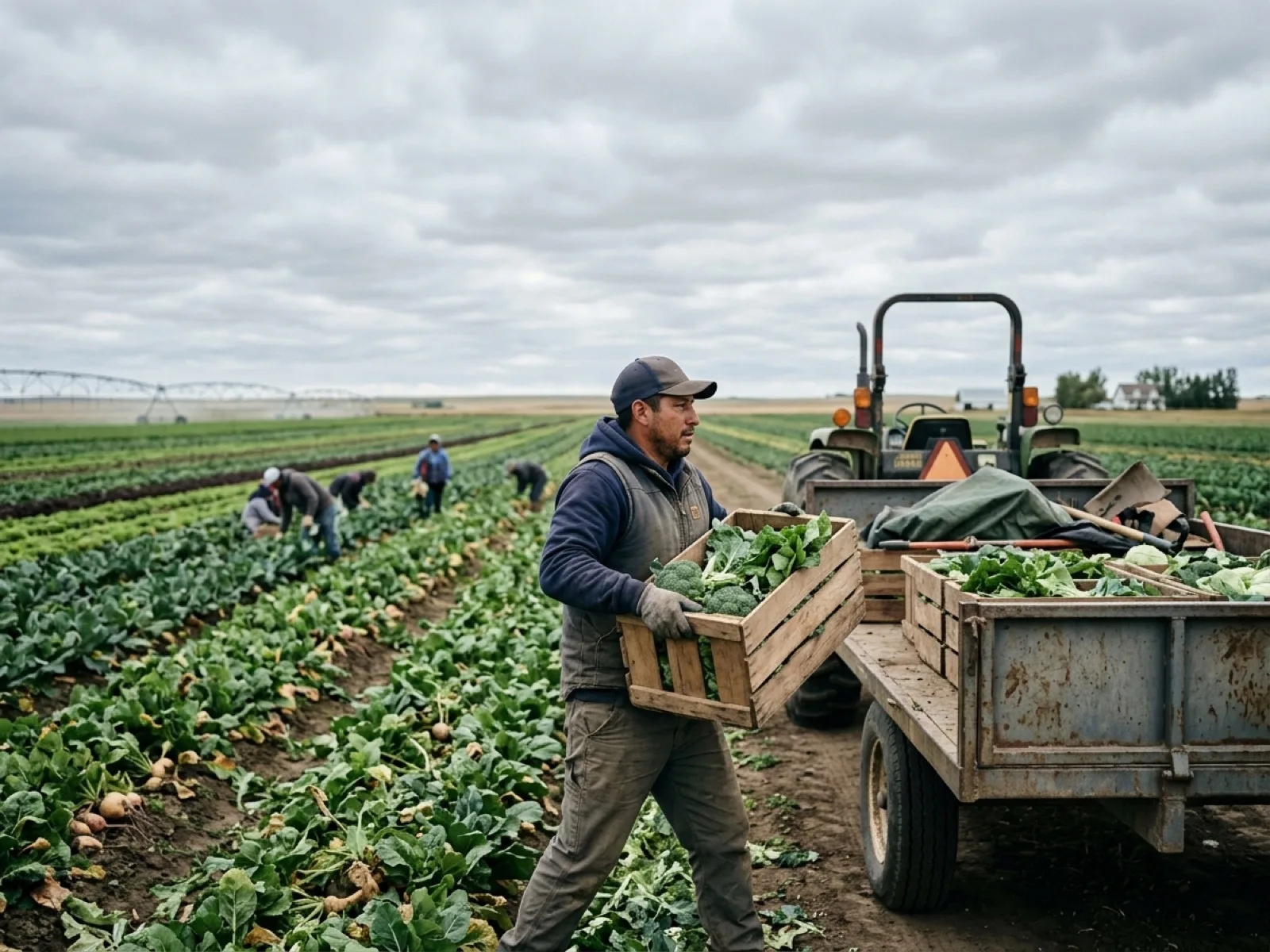
General farm and field
Who hires here: Grain and oilseed operations, mixed farms, market gardens, potato and root-crop producers, forage operations.
Roles we place: General farm workers, field hands, harvest crew, irrigation staff, grain-handling staff, seasonal labourers.
The volume category in agriculture, and the one where seasonality drives everything. Upforce scopes the engagement against your actual cycle so the arrival lands ahead of peak rather than during it. Candidates are verified on crop type and equipment familiarity by our partner offices, and where the role recurs each season we structure it for return rather than one-and-done.
- 02
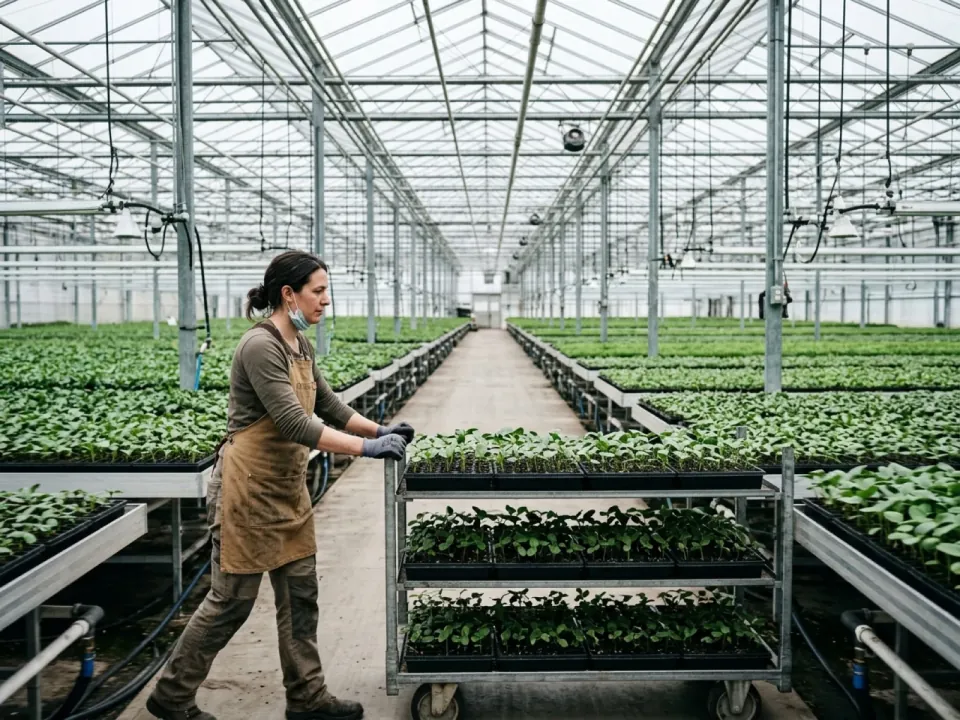
Greenhouse and nursery
Who hires here: Commercial greenhouses, vegetable and flower growers, nurseries, controlled-environment agriculture operations.
Roles we place: Greenhouse workers, growers and assistant growers, propagation staff, IPM scouts, harvest and packing staff.
Greenhouse work is year-round rather than seasonal, which makes it one of the better retention categories in agriculture. It is also more technical than field work: climate control, integrated pest management, propagation schedules. Upforce screens for documented greenhouse experience specifically, because field experience does not transfer cleanly, and for the crop family you actually grow.
- 03
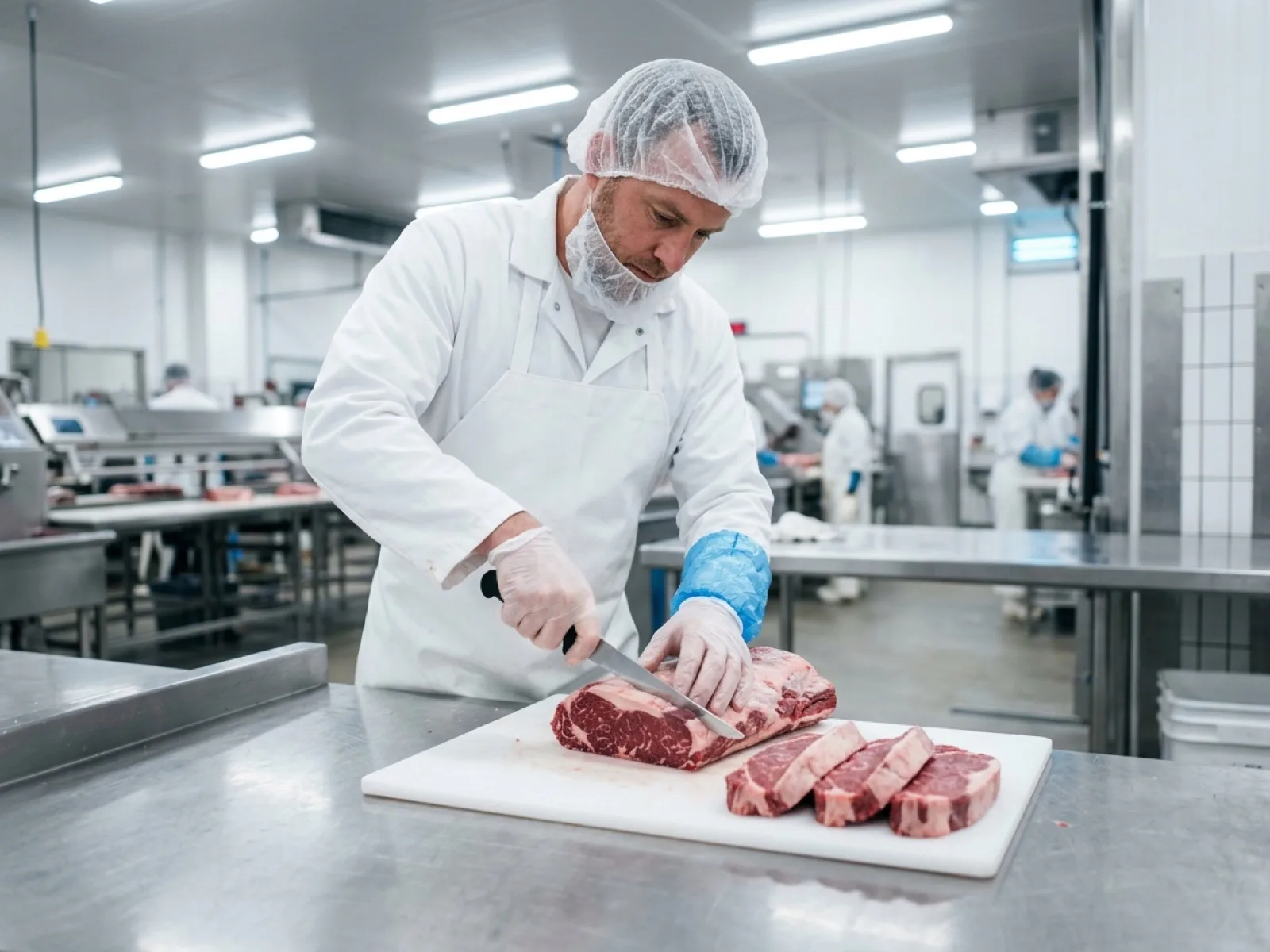
Meat cutting and butchery
Who hires here: Federally and provincially inspected plants, abattoirs, retail butchery operations, further-processing facilities.
Roles we place: Industrial meat cutters, butchers, boners and trimmers, sausage makers, packaging staff on the cut floor.
The most acute shortage in the sector and the one most worth PR-tracking. Industrial meat cutting is a skilled occupation that takes months to train, which makes turnover expensive and retention the whole game. Upforce sources candidates with documented cut-floor experience and verified food-safety training, and we structure these engagements so the permanent-residence pathway stays open from day one.
- 04
Food processing lines
Who hires here: Dairy, bakery and beverage plants, further-processing facilities, co-packers, frozen and prepared-foods operations.
Roles we place: Production line workers, sanitation staff, batch operators, packaging staff, warehouse and cold-storage workers.
Processing-line roles are largely unregulated, train quickly, and are exposed to HACCP and food-safety documentation rather than provincial certification. Upforce screens for prior work inside a documented food-safety system and for cold-environment tolerance where the role demands it, because that is a real and under-screened failure point in this category.
- 05
Livestock and dairy
Who hires here: Cattle operations, feedlots, dairy farms, hog and poultry barns, mixed livestock operations.
Roles we place: Livestock handlers, feedlot staff, dairy parlour workers, herdspersons, barn staff, calving and farrowing staff.
Livestock work is year-round, physically demanding, and depends on animal-handling judgement that does not show up on a CV. Upforce verifies hands-on livestock experience by species and operation scale through our partner offices, and screens for the shift reality — early starts, weekend rotations, calving season — because that is what people actually leave over.
- 06
Agricultural equipment and support
Who hires here: Larger farm operations, custom operators, grain terminals, agricultural service companies.
Roles we place: Farm equipment operators, combine and sprayer operators, grain-terminal staff, farm mechanics, agricultural maintenance staff.
Equipment-heavy roles where the screening is about hours on the machine, not years on a farm. Upforce verifies documented operating experience on comparable equipment. Where the role is primarily mechanical repair rather than operation, we scope it against the trades pathway instead, because the certification path is different.
Pathway mix for this sector
Which immigration pathway fits an agriculture hire?
Illustrative typical mix based on Upforce engagement patterns. Each engagement is scoped to the role you actually need to fill.
How we work on agriculture hires
Season-scoped, experience-verified, retention-structured.
Agriculture hires turn on seasonality and on whether the experience is real. Upforce scopes the engagement against your actual cycle so arrival lands before peak, and our partner offices verify crop or livestock experience by type and scale rather than accepting a CV. For meat cutting and greenhouse growing, where training investment is high, we structure the engagement so the permanent-residence pathway stays open. Immigration filing is handled by our licensed RCIC partners. See the full five-step process.

Agriculture hiring FAQ
Common questions from Alberta producers and plant operators.
How far ahead should we start a seasonal agriculture hire?
Work back from your peak. LMIA runs 5 to 8 months from written engagement to landing, so a summer peak means starting the conversation in autumn or early winter. Mobilité Francophone can compress that to 6 to 10 weeks where the candidate is francophone and the role qualifies.
Is meat cutting on Alberta’s demand list?
Industrial meat cutting has been in structural shortage in Alberta for over a decade and is commonly paired with an AAIP nomination for retention. Eligibility for any specific nomination is assessed by our licensed RCIC partners, not by Upforce.
Do farm or processing workers need Alberta certification?
Most do not. Processing roles answer to HACCP and food-safety documentation rather than provincial trade certification, and general farm work is unregulated. That keeps the timeline set by the permit rather than by credential recognition.
Can the same worker come back each season?
Return engagements are common in agriculture and are structured differently from one-off placements. We scope this in the written proposal, and the permit structure for any return is handled by our licensed RCIC partners.
How much does it cost to hire an international agriculture worker?
From $1,000 via Mobilité Francophone and $2,500 to $4,000 via LMIA, depending on the role. Government fees are separate.
Can we hire a full harvest crew in one engagement?
Yes. Crew hiring is routine in agriculture and gets one written proposal and one Edmonton point of contact. Grouping by role keeps the arrival sequence aligned with your cycle.
Hire smarter. Start in 24 hours.
Tell us the role and your season. We reply with a written proposal: pathway recommendation, candidate profile target, arrival timing against your cycle and pricing.